How to Become More Innovative

Differentiation in the presence of intensifying consumer demand uncertainty is a tall order.  It is therefore encouraging to know that innovativeness can be learnt, and that it is possible to identify processes and behaviour that promote or constrain it.

We know that we all have the propensity to innovate, although some of us are either too demotivated to activate our innovative selves, constrained by organisational barriers, or too ingrained in our ways of acting and seeing the world.  Whatever the constraints we face, there is a growing imperative for organisations to find new solutions to old problems and to create new products for emerging consumer demand. As consumer markets become more global, unpredictable and technologically disruptive, the need to innovate has become ever more pressing for differentiation and continued competitiveness.
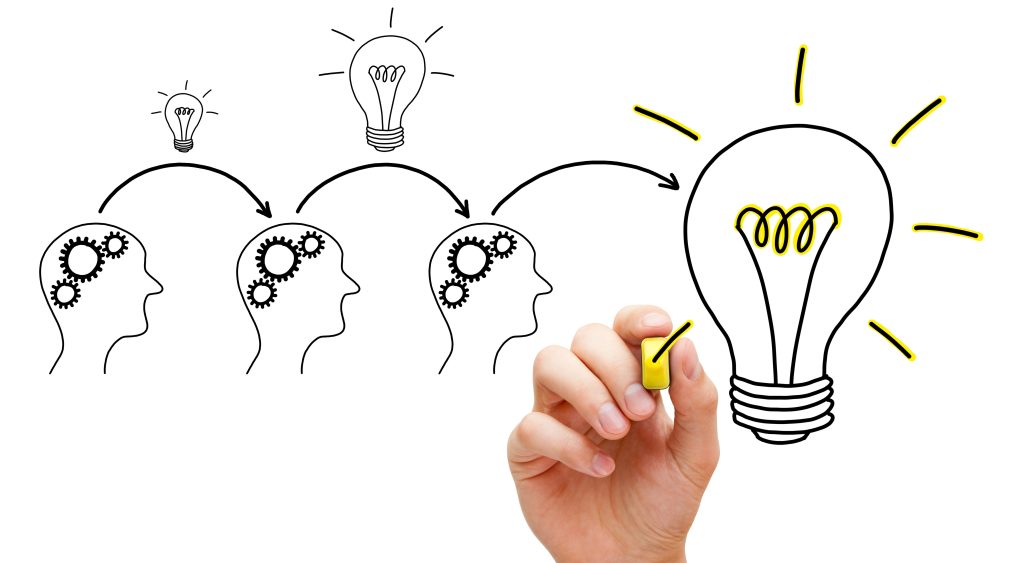
Here are my 4 key DOs and DON’Ts to becoming more innovative:

DOsDON’Ts
1. Implement an iterative process of discovery to test and validate your assumptions about the consumer problem you are trying to solve; how big it is; and the appropriateness of your solution and business model for taking it to the market1. Use the traditional, linear, milestone- based stage gate process of decision-making for new product development, where progress depends on achieving the previous milestone.
2. Employ a divergent approach by identifying and testing as many promising ideas as possible2. Converge on a single promising idea and defend it tooth and nail with consumers, instead of listening intently to their feedback
3. Get into the market as soon as possible with the aim of validating your ideas rapidly as you go along, and iterating based on consumer feedback to reduce uncertainty and costs.3. Try to manage uncertainty of consumer demand by aiming for desk-bound perfect planning & execution.
4. Aim to learn fast from consumer insights, and fail fast and cheaply by constantly iterating as you progress.4.  Engage in unnecessarily lengthy internal decision-making, locking in ideas not validated by consumers, that may result in costly failure.

To learn and practice an implementable process for innovating in your business, refer to Professor Nathan Furr’s on-line programme, Innovation in the Age of Disruption  

View details.

Apply here      Drawing on his own prolific research, numerous publications and interactions with Silicon Valley icons, Professor Furr has ‘nailed’ the innovation process in this programme, making it easy to master and implement, to effect change, in our present highly uncertain, digitised markets.

6 Simple Actions for Emotional Balance &Resilience Growth

We know that a revved-up nervous system is a threat to problem solving, creativity and recognising situations that could undermine our good intentions, and frustrate the accomplishment of business and personal objectives. So, what supportive actions could you take to uphold yourself when this happens, so that you can begin to access your best thinking and interpersonal relationship resources once again?

6 Simple Protective Actions

Here are 6 actions you could take to calm yourself and reduce your brain’s threat response:

1)  Avoid multi-tasking:Our brain is more adept at sequential task performance. Overloading it with more than one task at a time, especially novel ones, is very demanding of glucose, oxygen and blood circulation your bodily system needs to multi-task. You are likely to feel tired very quickly and find yourself making unforced errors as your attention slips.

2)  Front-load heavy lifting tasks: Tackling tasks that are more demanding of brain energy first, will go a long way towards enabling you to get through your day more productively and satisfied. It is easy to get side-tracked by checking social media and your inbox first thing in the morning. Before you know it, so much time has passed that you will have to extend your working hours to meet a pivotal client’s service request.

3) Boost your Oxygen Supply:  The quality of our breathing affects performance on tasks requiring mental effort. Where are your breathing from? Above your diaphragm or below it? Are you taking increased, shallow breaths, to increase your oxygen intake, as your brain senses a reduction in supply? Breathe in deeply and slowly, from below your diaphragm so that your lungs expand to take in more oxygen, and expel carbon dioxide waste when you exhale. Boosting oxygen supply improves brain functioning.

4) Let your mind travel: Recall a memory from the past associated with positive emotions. This will result in feeling the pleasurable emotion in the present, to override your brain’s threat response, and activate positive emotional energy to accomplish your day’s workload.

5) Change your environment:  When we are stressed, we ruminate about our unwanted circumstances, and the more we think about them, the more ingrained our negative thoughts become. Taking ourselves out of our usual environments, even if just for a short while, can have a calming effect. Leave the office to take a walk around the block, or jog in a nearby park to awaken your senses. Even better, take a quick weekend break to a destination that inspires and invigorates you. If none of this is possible, due to COVID-19 restrictions, then simply step outside for breaths of fresh air, periodically, to expand your lung’s intake of oxygen.

6) Do something just for fun. Activities that inject humour into our everyday lives relieve stress levels by lightening our spirits and emotional load. When we are under enormous pressure to meet a tight deadline, or solve a seemingly intractable problem, even when experiencing mental strain, we tend to push on. This is even when our train of thought is along a rutted track. Allowing yourself an interlude, even if just briefly, to do something you enjoy, could increase your levels of oxygen and glucose needed for demanding mental processing. Whether taking in an entertaining movie, engaging in an exciting computer game or connecting with a friend who inspires you, any behavioural activity, that results in lifting your mood, would be helpful to restore your emotional balance and grow your resilience.

ASSESS YOUR PERSONAL STRESS SIGNATURE

Checking in with Yourself

You wake up on a Monday morning with your memory of back to back team meetings in your calendar, and the deadline for that mission critical Project X for your company’s digitisation slowly coming into focus.  If only team members will deliver what they committed to on time for once, you would feel less anxious about deadlines. Then you will still somehow have to find the time to respond to your share of the world’s more than 267 billion emails that will be generated today. Not to mention, you are now working from home due to your country’s COVID-19 lockdown.

When your mind flits over all of these work demands, your breathing becomes shallow. You feel exhausted already just thinking about them.  A knot is developing in your stomach. Then, you remember the rest of the week, which gives no respite. The knot is now tightening, accompanied by shoulder tension. You wish it were still Sunday. In my Resilience coaching, these are some of their stress signatures my clients have shared with me.

Does this sound familiar to you? What you are experiencing are early warning signals that you are on edge. How on edge are you? It is particularly being on edge repeatedly that produces these effects. If we experience an unmanageable stress load that continues for weeks or months on end, without respite, we need to pay careful attention to this. Otherwise, we may collapse or experience burn out.

We all have unique stress signatures. They manifest in our emotions, thinking, body, behaviour, and impact on our relationships.

Quick Stress Signature Assessment

How could you monitor yourself to acknowledge your stress signature and take preventive measures?

An important principle is to look at your feelings and thoughts as if they were objects outside of you. Looking through feelings and thoughts clouds your perspective. Even worse, over time your unhelpful feelings and thoughts assume a life of their own, and you become them.

Here is a simple approach to help you determine whether you are carrying a manageable stress load, or feeling overloaded. Simply note down what you typically experience when you are stressed in all of these 5 areas. The example given here is derived from the Checking in with yourself section.

YOUR STRESS SIGNATURE:

AFFECTED ASPECTSWARNING SIGNS
FEELINGeg. Anxious, Frustrated
THINKINGDon’t know how I will cope, but I must
BODYRacing breathing, Knot in stomach, Shoulder tension
BEHAVIOURDistracted, Make unforced errors
RELATIONSHIPSIrritable, Impatient
Stress Signature Assessment Example

Restore Your Balance First

A revved-up nervous system, is a barrier to problem solving, creativity and accessing your best thinking for addressing your situation. You need to modulate this first before you can develop and implement your action plan with any degree of success.